

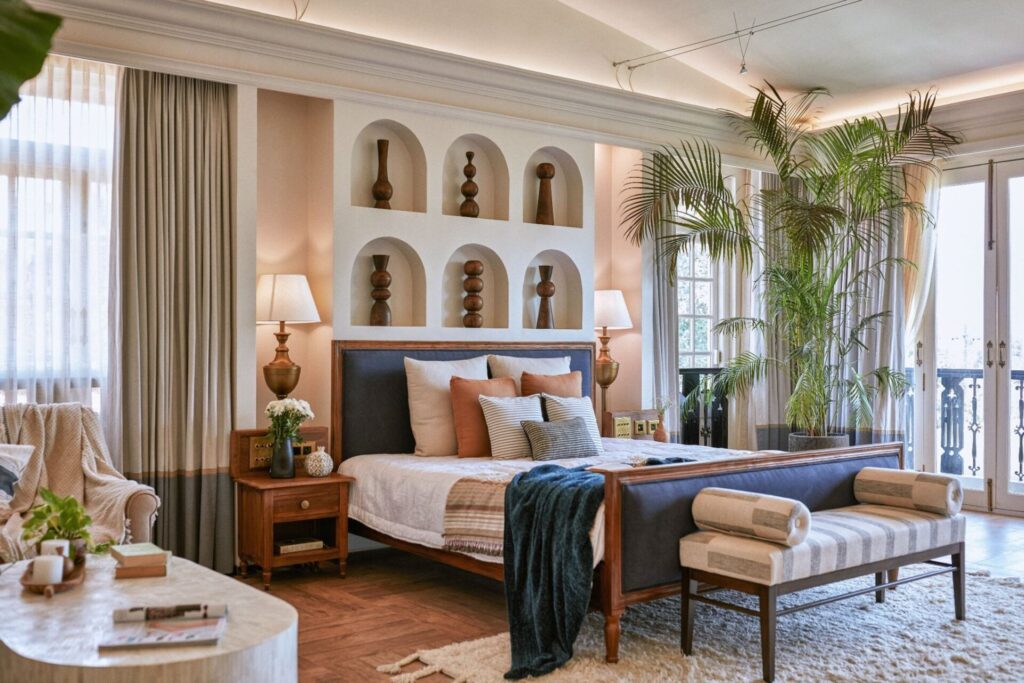
Beyond a place to stay, Lohono curates immersive escapes shaped by comfort, privacy and exceptional service.
There is a quiet but unmistakable shift happening in how India’s wealthiest individuals think about second homes. It is no longer simply about owning a beautiful property in Goa or Alibaug. Today, it is about owning one that works, that delivers lifestyle value on weekends and financial return through the week. This is the new logic of luxury real estate in India. And it is reshaping both the ownership conversation and the hospitality one.
A Market That Has Moved Beyond Aspiration
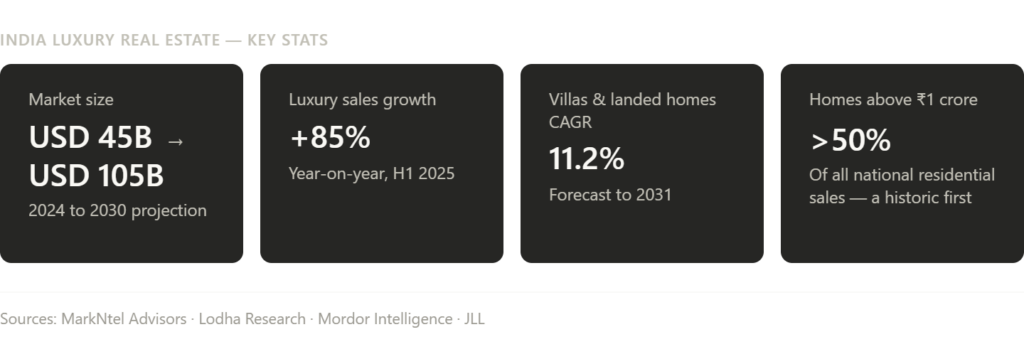
India’s luxury residential real estate market was valued at approximately USD 45 billion in 2024. By 2030, it is projected to reach USD 105 billion; a compound annual growth rate of around 15%. Within that broader market, villas and landed homes are the fastest-growing segment, fuelled by demand from high-net-worth individuals, NRIs, and a new generation of affluent buyers who prioritise space, privacy, and personalised living.
The pandemic was a defining moment. It accelerated a shift that had been quietly building toward larger, private, amenity-rich homes in scenic locations, away from the density of city living. Destinations like Goa, Coonoor, Alibaug, and Lonavala saw a surge in demand not just as holiday escapes, but as genuine alternatives to urban primary residences.
The numbers reflect this decisively. In the first half of 2025 alone, luxury housing sales across India’s top seven cities grew by 85% year-on-year, with nearly 7,000 units transacted. Homes priced above ₹1 crore now account for more than 50% of total residential sales nationally, a first in the history of Indian real estate. Luxury has moved from niche to mainstream.
What is particularly telling is that a large share of this demand is not purely end-use driven. Buyers are purchasing with a dual agenda: the quality of the experience when they visit, and the quality of the return when they do not.
The Rental Equation: What Owners Are Actually Earning
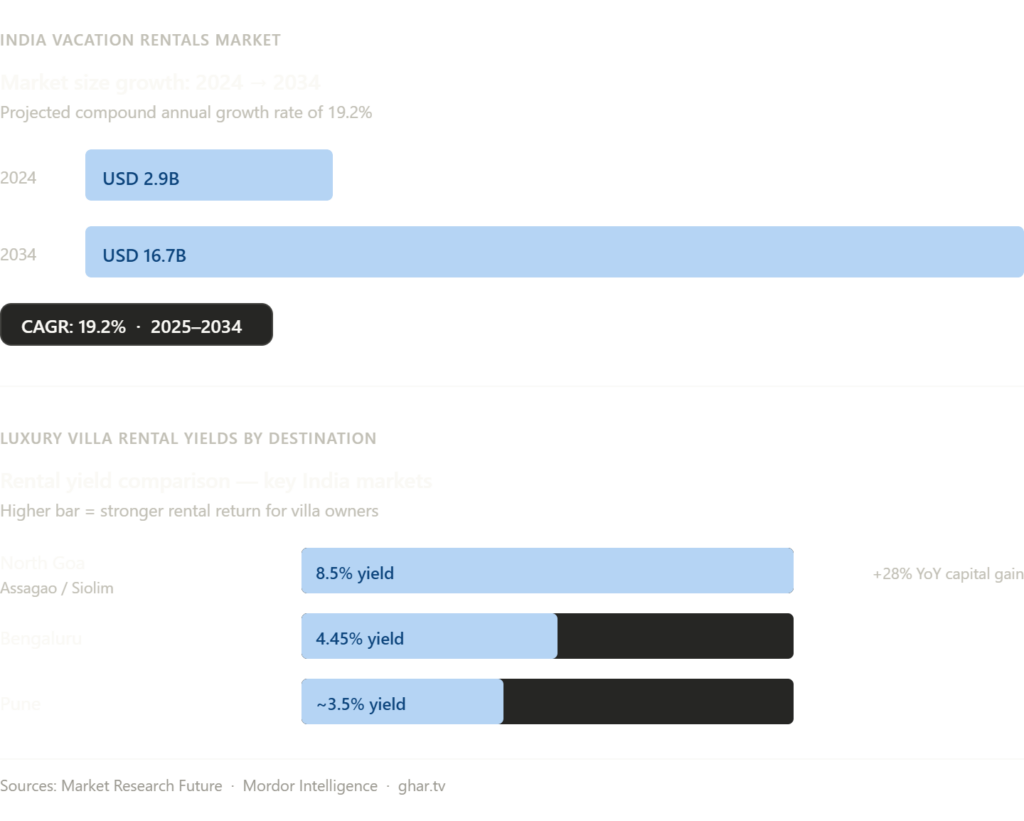
The India vacation rentals market stood at approximately USD 2.9 billion in 2024. It is projected to reach USD 16.7 billion by 2034, a CAGR of 19.2%, making it one of the fastest-growing segments within the broader travel and hospitality economy. The driver is straightforward: travellers, particularly at the premium end, have moved decisively away from hotels toward curated private stays that offer space, exclusivity, and a genuine sense of place.
Luxury villa owners in the right locations are seeing this translate into compelling financial returns. Goa leads the country: Grade A villas in North Goa micro-markets like Assagao and Siolim recorded 28% year-on-year capital appreciation in 2024, alongside rental yields of 5% to 8.5%. These are not speculative projections. They reflect active demand from high-spending travellers willing to pay a significant premium for properties that deliver a truly elevated experience.
But yield is only one part of the return. The other harder to quantify but no less real is the quality of the asset itself. A poorly managed property depreciates in experience and in value. A well-managed one appreciates on both counts. The real question for a second home owner is not simply what their property can earn. It is whether the infrastructure exists to ensure it earns consistently, without compromise to the home’s condition or the guest’s experience.
This is where professional management changes the ownership calculus entirely.
The Hidden Costs of Second Home Ownership
There is a version of second home ownership that looks effortless from the outside. A beautiful villa, a dream destination, a property that funds itself. The reality is more layered and understanding it early is what separates a sound investment from an expensive one.
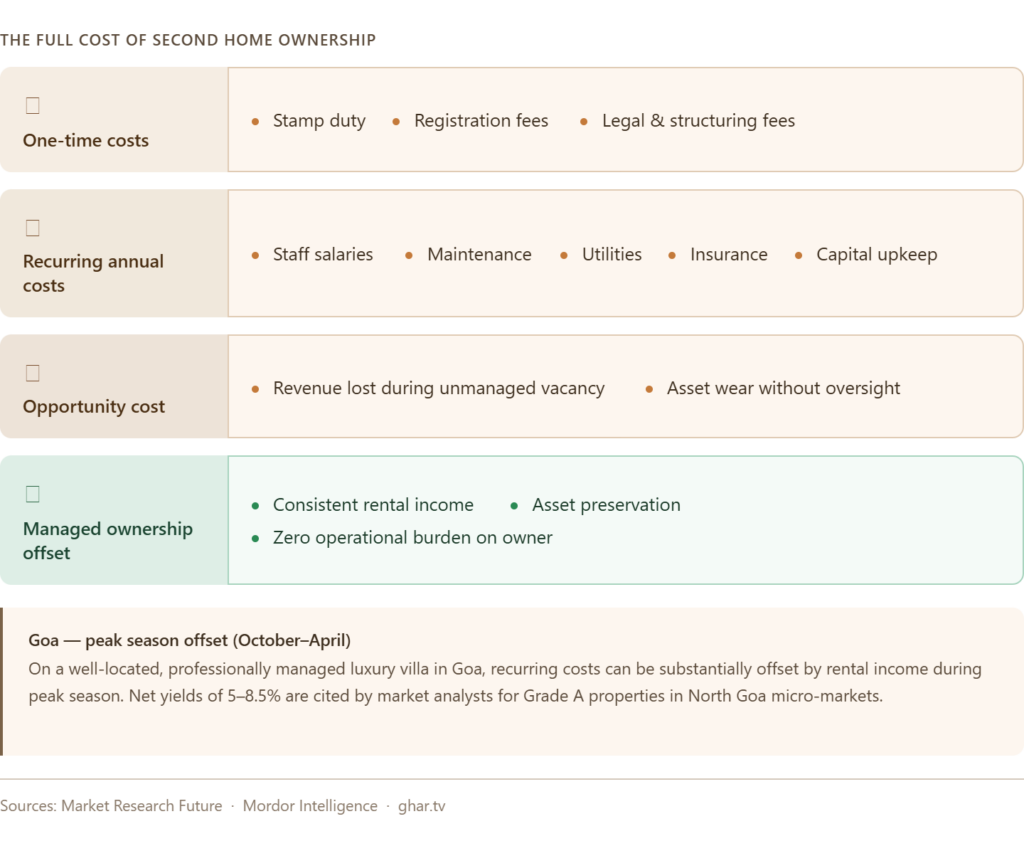
The obvious costs are visible at purchase: stamp duty, registration, legal and structuring fees. What tends to catch owners off guard are the ongoing ones. Staff salaries, property maintenance, utility bills, insurance, and periodic capital expenditure on interiors and fixtures accumulate steadily. In a high-humidity coastal market like Goa, or a property that sees heavy usage across peak holiday seasons, maintenance is not a minor footnote. It is a continuous commitment.
Then there is the opportunity cost. A home that sits empty during peak season because the owner is not visiting is a home generating nothing. A home that is rented without proper oversight can return to the owner in a condition that requires significant investment to restore. The real cost of luxury ownership, therefore, is not the ticket price on the property. It is the total ecosystem required to sustain it and the experience it reliably delivers, to the owner and to the guest, every single time.
The most intelligent approach to this equation is managed ownership. When a property is in the hands of a hospitality-grade management team, one that curates the guest experience, maintains the asset to a consistent standard, and handles every operational detail the owner receives what they actually bought: a home that is always ready, always impeccable, and generating returns in their absence.
A Managed Luxury Villa: A New Category of Asset
Six years ago, the concept of a professionally managed, hotel-standard private villa in India was genuinely novel. Today it represents one of the most sought-after intersections of real estate and hospitality in the country. The buyer who once chose between a hotel suite and a privately rented bungalow now has a third option – one that offers the intimacy of private ownership with the consistency and service of a five-star hotel. This is the category that Lohono Stays by Isprava has helped define and lead.
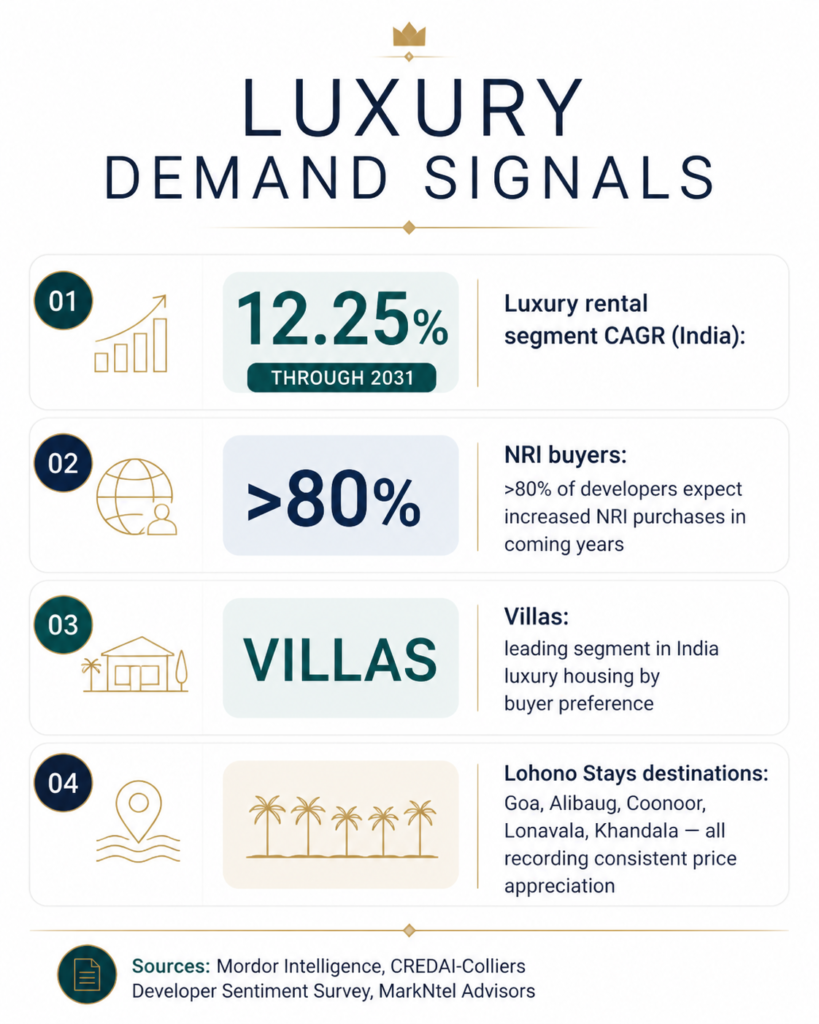
The broader market is reflecting this direction clearly. The rental segment within Indian luxury real estate is growing at 12.25% CAGR. The fastest of any sub-segment. NRI investment is rising, with more than 80% of real estate developers anticipating increased NRI buying in the coming years. The villa segment specifically leads the luxury market in terms of buyer preference, driven by the demand for privacy, space, and customisation that no other format can replicate.
Lohono Stays operates across Goa, Coonoor, Alibaug, Lonavala, Khandala, and other carefully selected destinations. Each property is handpicked for its architecture, its setting, and its ability to deliver an experience that is inseparable from where it sits. Every detail is considered, the way natural light moves through a room, the feel of the floors underfoot, the view from the right chair. And behind every detail is a management infrastructure built to sustain it: in-house chefs, airport transfers, curated concierge services, local experiences, and a team present at every point of the stay.
For an owner, this translates to something straightforward: a beautiful home in a world-class location, looked after to an exceptional standard, generating rental income when not in personal use with none of the operational weight of managing it themselves.
The Takeaway
The second home conversation in India has grown up. It is no longer driven purely by aspiration or lifestyle signalling. Today’s affluent buyer is asking sharper questions: What does this property cost me, all-in? What does it earn when I am not there? Who is responsible for keeping it exceptional?
The most enduring luxury purchases are the ones that deliver on every dimension not just at the moment of acquisition, but consistently over time. A well-chosen, well-managed villa in the right destination is not just a home. It is a long-term asset that appreciates, earns, and delivers an experience that no hotel can replicate.
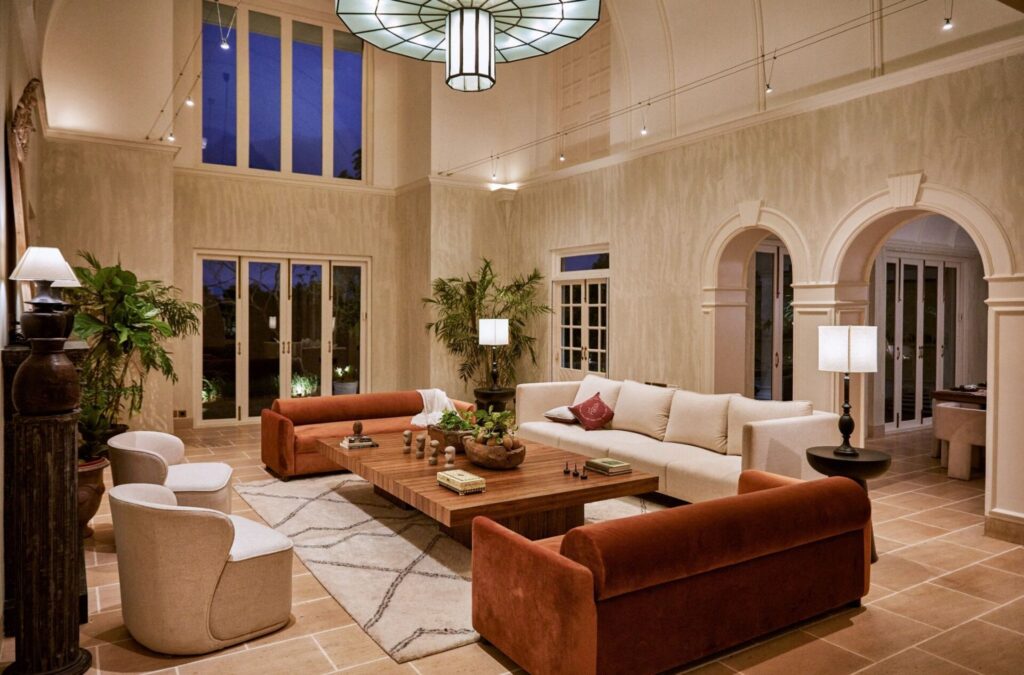
That is the standard Lohono Stays was built to meet. And for a growing number of discerning buyers across India, it is becoming the only standard worth considering.
Lohono Stays by Isprava — luxury managed villas across Goa, Coonoor, Alibaug, Lonavala, Khandala, and beyond.