

Understand the key tax implications of buying, earning from, and selling property in India.
For many NRIs (Non-Resident Indians), buying a home or a property in India is more than just an investment. It can be to stay rooted in a familiar place, or to design a second home for their family and loved ones. Or to build a long-term asset in a market they understand.
However, owning a property in India also creates a financial relationship with the location. Rental income can become taxable, a future sale can trigger capital gains, and moving proceeds overseas involves multiple foreign-exchange rules alongside tax considerations.
NRI Property Tax in India is best understood not as a mere compliance exercise but as part of the broader decision of how an asset will be owned, used, managed, and eventually sold. The rules are nuanced and differ case to case. But understanding the key points makes the ownership journey clear and seamless.

- Residential Status
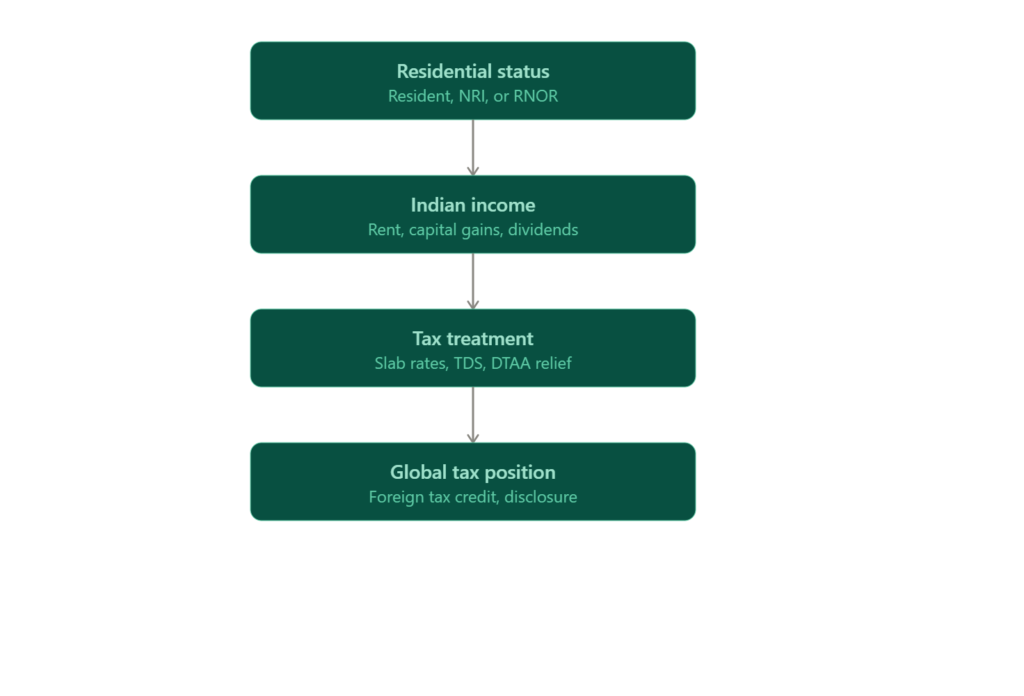
Before looking at tax rates, it is vital to understand if you are actually an NRI for Indian Tax purposes. Residential status is determined by factors such as
- Physical Presence in India during the relevant financial year and the preceding years
- Specific rules and exceptions apply to Indian citizens and persons of Indian origin
Why does this matter?
Your residential status influences how your income is taxed in India. For an NRI, income arising in India such as rent from an Indian property or gains from its sale can remain taxable in India even if the owner lives overseas. The first strategic decision is therefore not, ‘’How much Tax will I pay?’’ But, ” Where does my property sit within my overall global financial footprint?’’
- Understand the Tax Cost of Owning the Property
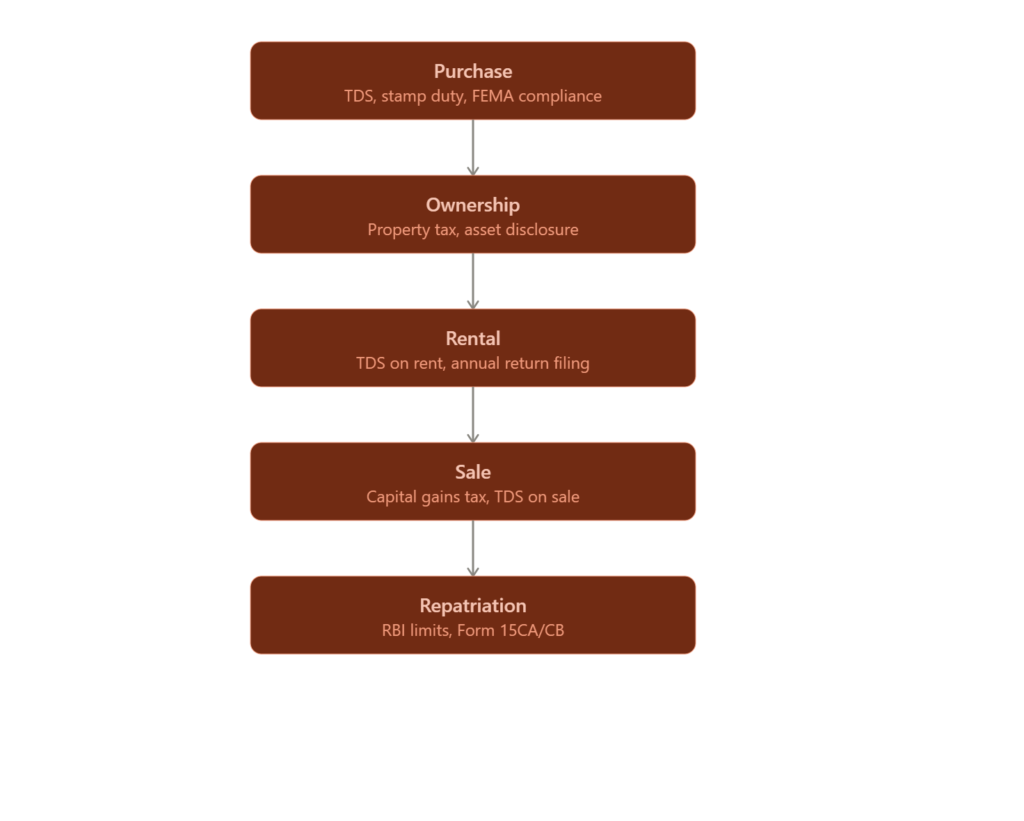
The tax implications for NRI investing in India start even before rental income or capital gains enter the picture. On purchase, an NRI generally encounters the same property transaction costs as other buyers, including stamp duty and registration charges applicable in the relevant state. There isnt a blanket NRI exemption that removes these costs.
And here are the more important points to consider: NRIs can use permitted banking channels and accounts such as NRE and NRO accounts, subject to applicable FEMA rules. The source of funds is important later when the proceeds are repatriated. This is where tax planning intersects with wealth planning. The question is not what a property costs to acquire, but whether the ownership structure and funding route remain appropriate over a 5,10 or 15-year holding period.
- Rental Income: Look Beyond the Headline Yield
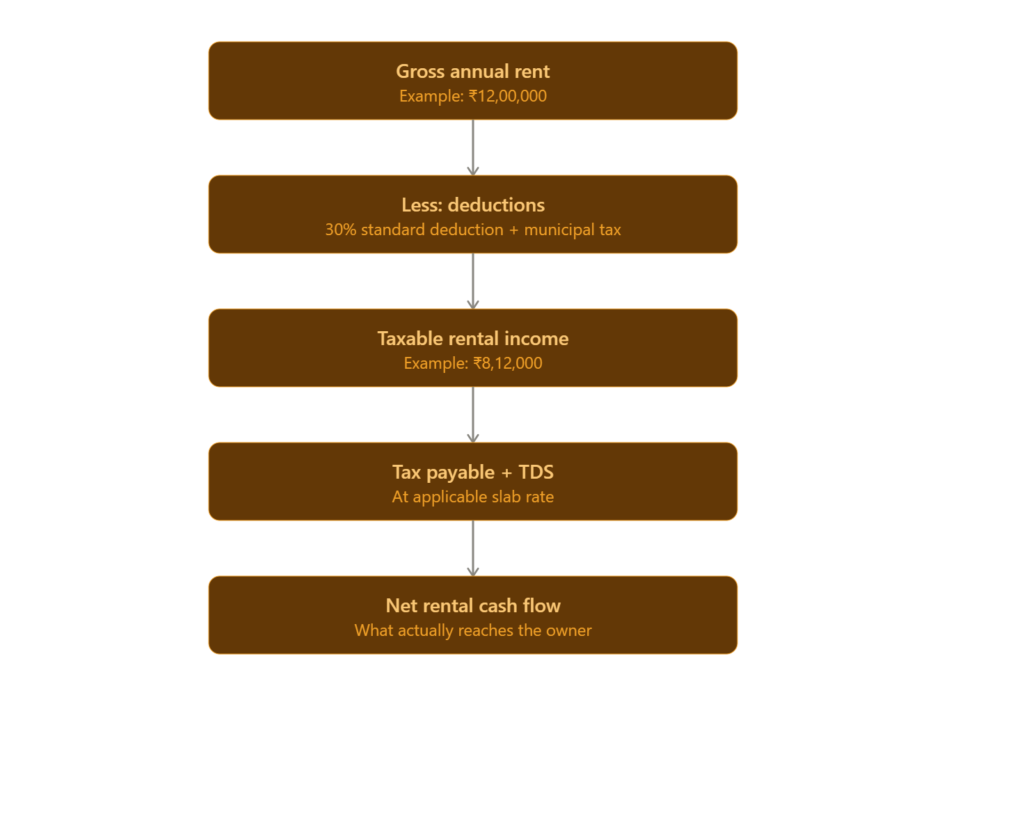
For NRIs who plan to rent out their home, rental income earned in India is generally taxable in India. This is where the difference between Gross Rental Yield and Post-Tax Income becomes important.
Income from a let-out property is calculated under the house-property provisions with deductions available under applicable rules. A standard deduction of 30% of the annual value is available in computing income from house property. Interest on qualifying borrowed capital can also be relevant.

Here, it is also important not to confuse the 30% standard deduction with the TDS rate. Payments to an NRO can attract withholding under Section 195, with the applicable rate depending on the nature of the payment and prevailing tax provisions. Hence, for an NRI investor, the useful number is therefore not simply the rent received. It is the ‘’Income that remains after tax, financing costs, property management fees, and other ownership expenses.
This distinction becomes especially important for Luxury properties where the objective may be a combination of personal use, rental income, and long-term appreciation rather than rental yield alone.
- Selling the Property: Capital Gains Matter
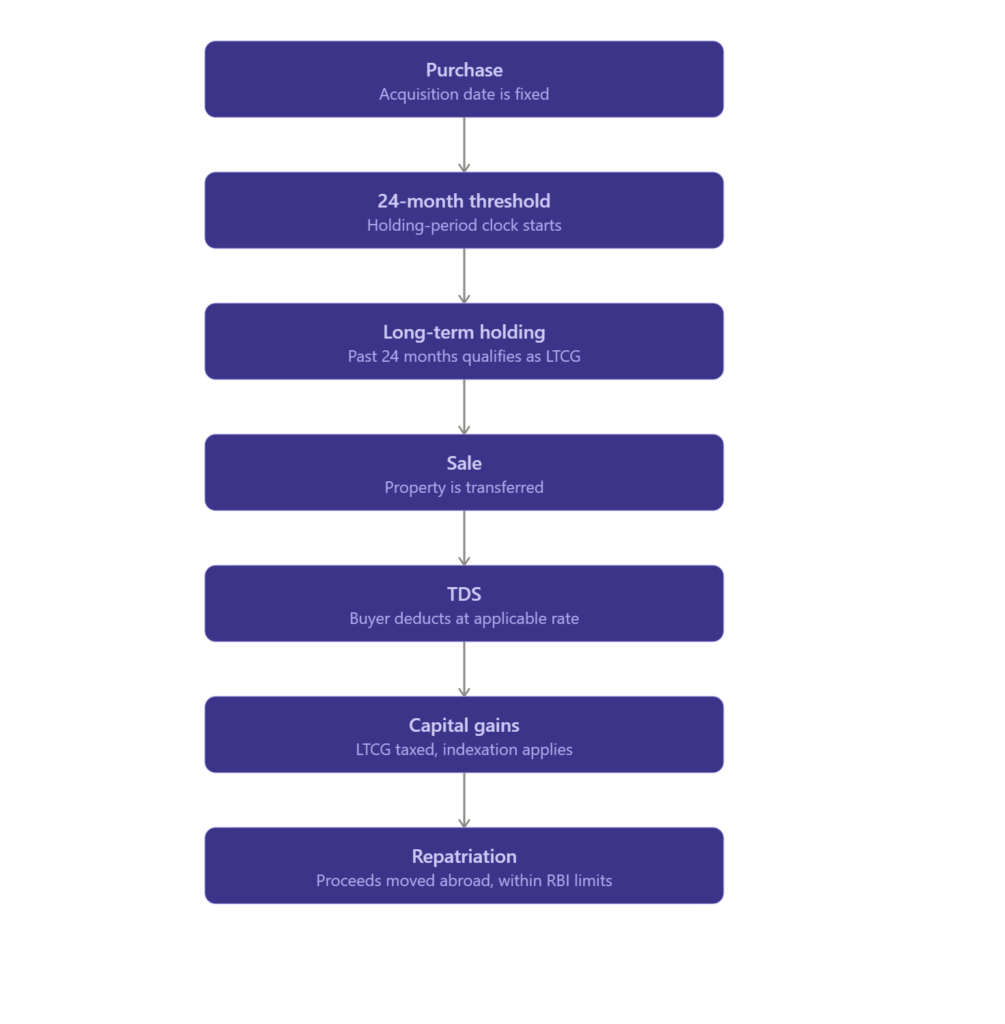
The tax implications of selling an Indian property can be more significant than those at purchase. For immovable property, the long-term holding threshold is more than 24 months (2 years). A property sold before that period usually results in short-term capital gains, while a property held for more than 24 months is treated as a long-term capital asset.
The Tax treatment has also changed in recent years. For transfers subject to the post-July 2024 regime, long-term capital gains on many assets, including immovable property, are generally taxed at 12.5% without indexation, subject to the specific rules and transitional provisions that may apply. For an NRI, another important difference is that the buyer generally has withholding obligations when purchasing property from a non-resident seller under Section 195. The amount withheld is not necessarily the seller’s final tax liability; however, it is part of the broader tax process surrounding the transaction. The strategic point here is that the eventual exit should be considered at the time of entry.
Think Globally: DTAA Can Change the Outcome
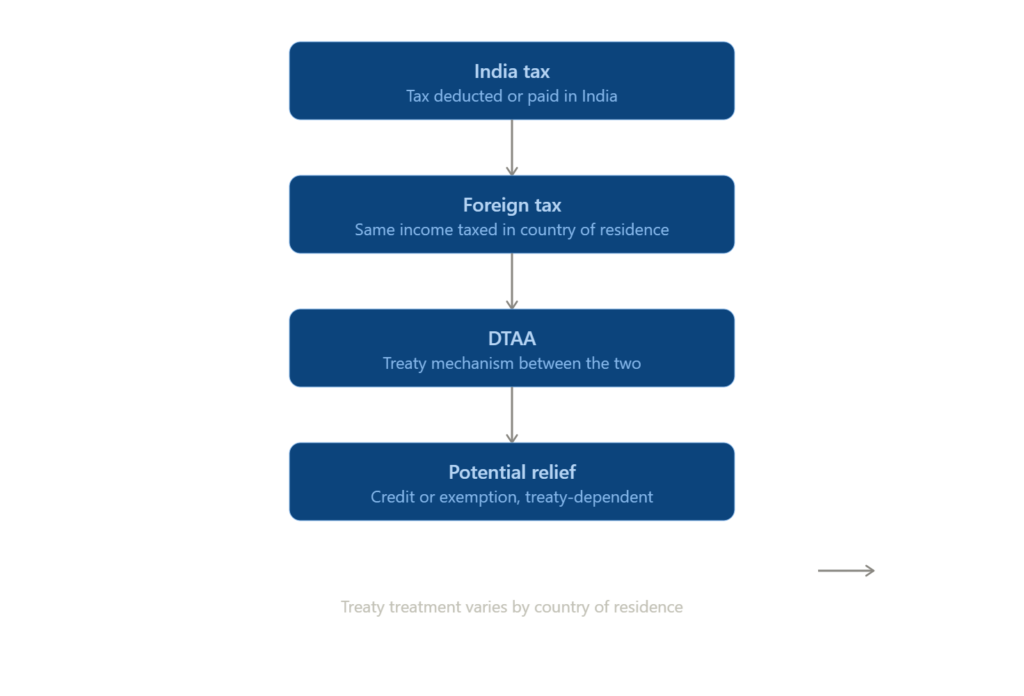
An NRI may have tax obligations in both India and their country of residence. For example, rental income or capital gains arising from Indian property may be taxable in India, while the investor’s country of residence may also have reporting or taxation requirements. This is where a ‘’Double Taxation Avoidance Agreement (DTAA)’’ can become relevant. The exact benefit depends on several factors:
- Treaty between India and the concerned country.
- The nature of income and the individual’s circumstances
- Documentation such as: Tax Residency Certificate
All of these can be equally important when claiming treaty benefits. The main objective is not to eliminate tax artificially. Instead, to ensure that the same income is not taxed twice when the treaty relief is available.
Repatriation Should Be Planned Before the Sale
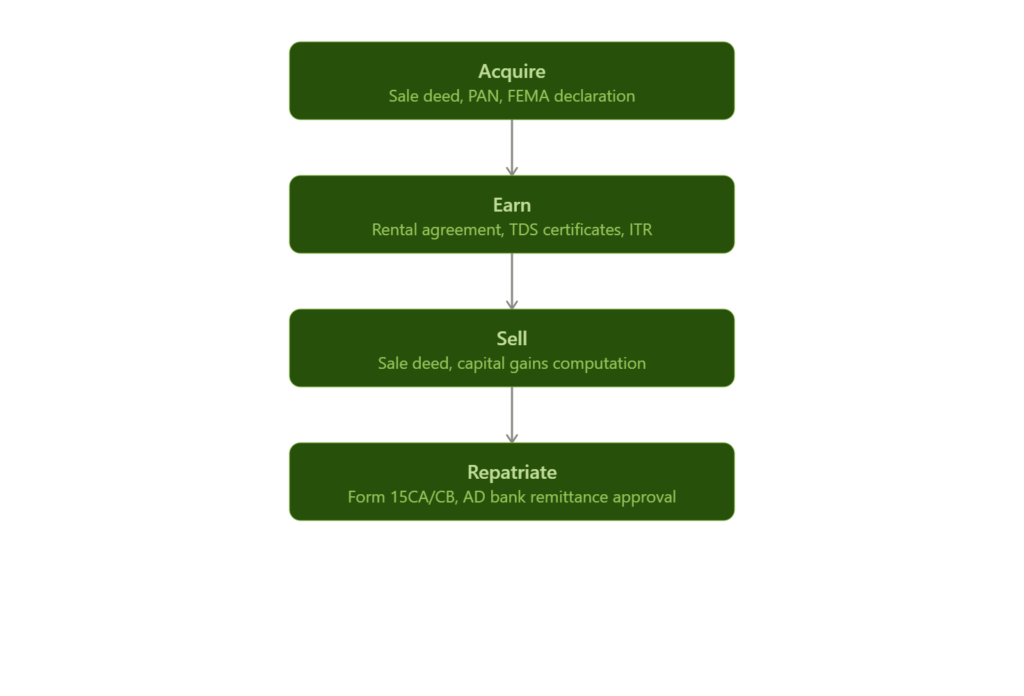
For many NRIs, the investment does not end when the property is sold. The next question is, ‘’How easily can I move the money back overseas?’’ FEMA and RBI rules govern repatriation; the route available depends on how the property was acquired and how it was funded, and where the sale proceeds are held.
For eligible NRIs and OCIs, repatriation of sale proceeds from residential or commercial property can be permitted through authorised dealer banks subject to applicable conditions. The RBI framework also helps provide a facility for remitting up to US$1 million per financial year FROM eligible NRO balances and certain asset sale proceeds, subject to applicable taxes and documentation requirements.

That makes documentation more than an administrative detail:
- Purchase agreements
- Payment records
- Bank trails
- Tax documents
- Ownership records
All of these are crucial when money eventually moves across borders.
The Question Remains: What Comes After the Tax
For an NRI, investing in Indian real estate should not start and end with the headline property price or the headline tax rate. The more essential question is what the asset looks like after considering the following:
- Tax
- Rental income
- Financing
- Management
- Appreciation
And eventual repatriation; that is the difference between buying property and structuring an investment. Tax is an important part of the equation, but it should not dictate the entire decision. A well-located, thoughtfully designed property with long-term fundamentals can continue to make sense after taxes and ownership costs are accounted for.

The goal ultimately is not to avoid tax, but to understand it early, plan intelligently, and invest with clarity.
Tax and FEMA rules can change, and individual outcomes depend on residential status, source of funds, holding period, treaty jurisdiction, and other factors. NRIs should seek advice from a qualified tax and financial professional before making an investment or repatriation decision.