

From privacy and design integrity to effortless ownership and emotional fulfilment. Modern luxury is no longer about excess, but intention.
For years, luxury real estate operated on a single operandi: more was more. Expansive plots, high ceilings, more bedrooms, more marble. Size was the language used to convey status, and square footage was the headline in every listing. However, this logic has quietly shifted.
| Old Definition of Luxury | New Definition of Luxury |
| Bigger is better | Purposeful design is better |
| Visible opulence | Understated, enduring quality |
| Square footage as status | Spatial experience as status |
| Feature-led buying | Experience-led buying |
| City proximity = prime location | Seclusion & calm = prime location |
Today’s discerning buyers: executives, entrepreneurs, HNIs and UHNI families are now asking a different set of questions. Not the size and dimensions of the villa, but the lifestyle you sign up for. Across India’s premium villa markets, from Goa’s coastal calm to the mist-filled hills in the Nilgiris. From the shoreline escape to Alibaug to the quiet plains in Coorg.
Here, a new definition of luxury is taking shape.
Limitation of Size
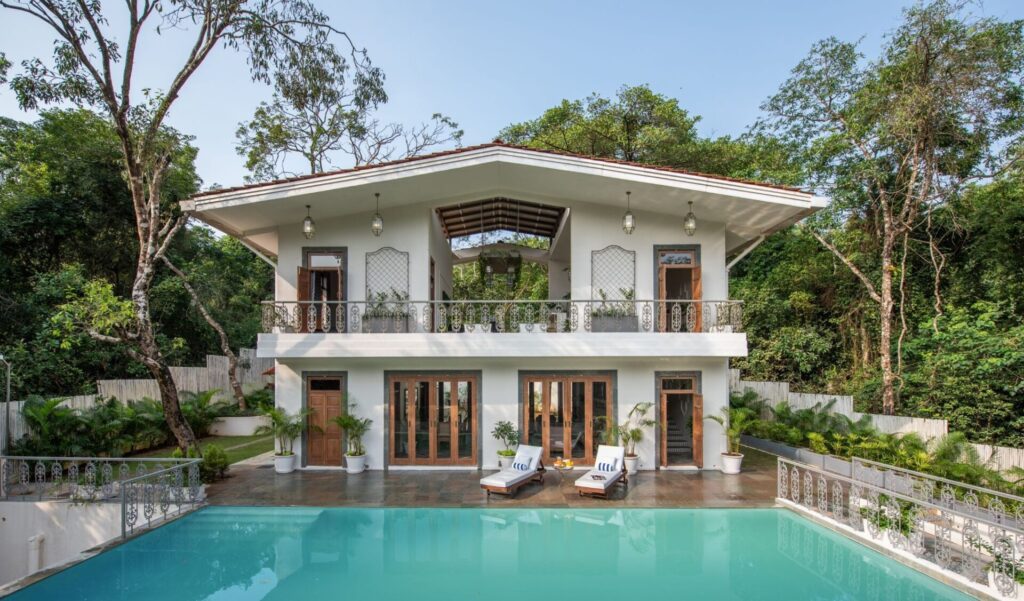
A large home has a different version that is often not spoken about: corridors that echo, multiple rooms that are unused, and spaces that impress you for the weekend but exhaust you after a month. Indian luxury homebuyers are beginning to recognise this. What matters today is not how many square feet a villa is, but how the space is utilised.
Flow, function and layout; the way a home presents itself from dawn to night.
| Buyer Priority | Rank Among HNIs | % Citing as Key Factor |
| Usability of space / layout | #1 | 67%* |
| Design quality | #2 | 61%* |
| Privacy & seclusion | #3 | 58%* |
| Build & construction quality | #4 | 54%* |
| Total square footage | #5 | 29%* |
Source: JLL India — HNI Leisure Home Survey, 2023
The ease with which indoor and outdoor spaces connect, the way light travels through every room. These are the qualities that help a prospective buyer determine if a luxury villa is truly worth buying and worthy of being a home. A well-designed 4,500* sq. ft villa can feel way more generous and livable than a poorly planned 8,000* sq. ft one. The difference lies not in the area and size but in the architecture and design.
| INSIGHT | Spatial IntelligenceAccording to a 2023 JLL India report, design quality and spatial planning have overtaken size as the top purchase driver among HNI buyers in leisure home markets. Over 67%* of respondents ranked ‘usability of space’ as a critical factor — above total area. |
Privacy: The Currency That Cannot Be Listed
If you ask an HNI or an UNHI what they value and look for in a second home, privacy ranks at the top almost everywhere in the world. Privacy not as an amenity add-on but as a way of being, the ability to exist without interruption. This has completely changed how premium villa communities are conceived. Low-density developments, where the plots are generous, neighbours are the select few, and the sight lines are managed, is what commands a second home, not just the size. There is a growing understanding that a home is as important as what is inside it.
| Project Type | Avg. Units per Project | Price Premium vs. High-Density |
| Standard luxury villa project | 120–200* units | Baseline |
| Mid-density premium project | 50–100* units | +8–12%* |
| Low-density luxury enclave (<50* units) | 20–50* units | +18–22%* |
| Ultra-exclusive (<20* units) | Under 20* units | +25–30%* |
Source: Knight Frank India, 2024
Gated villa communities and homes have seen a rise in India’s leisure markets with buyer preferences shifting to lower plot-density projects. The era of building as many luxury homes as possible crammed into one parcel of land is paving the way where restraint in itself is a luxury product.
Privacy here is no longer a feature; it is the foundation the home is built on.
| MARKET SIGNAL | Density vs. DemandLuxury villa communities offering fewer than 50* units per project have seen 18–22%* higher per-sqft premiums compared to larger developments in the same micro-market (Knight Frank India, 2024). Scarcity of neighbours, not just of inventory, is driving prices. |
Designed For The Location
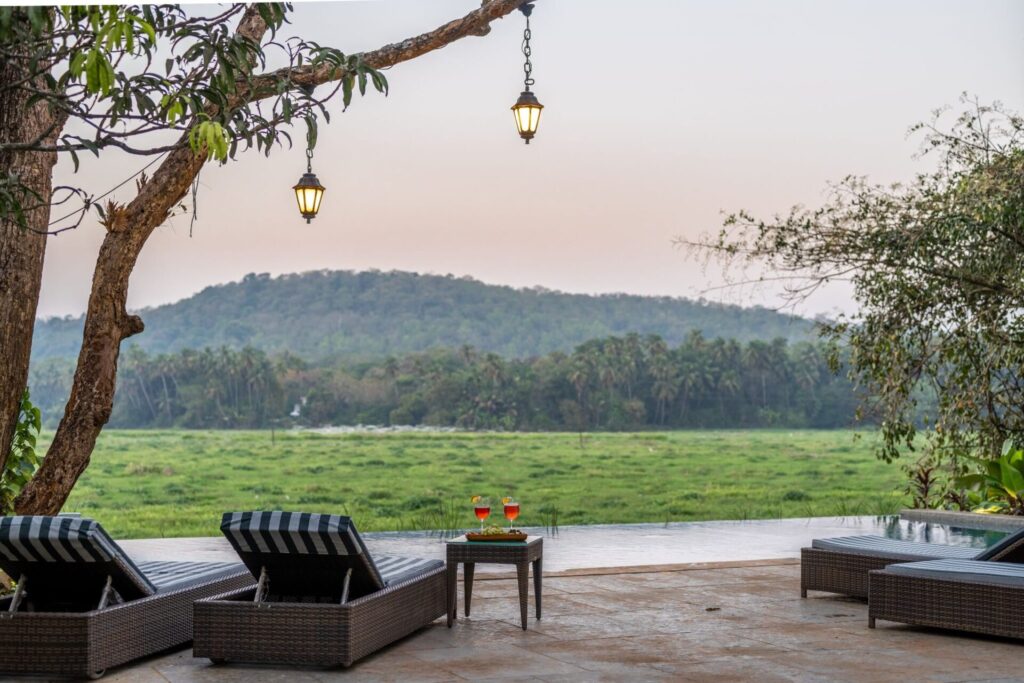
The most coveted villas in India share one quality that makes them special to that location: designed and curated for a specific landscape, direction of the sea breeze, movement of light, and sound of rain. The ability to design for the climate, culture, and landscape is the hallmark of architecture that endures.
Bespoke architecture and design in the luxury villa segment is stepping away from the cookie cutter method.
With the same facade replicated in different terrains, across homes to create something more considered. Homes that use local materials, integrating natural contours, optimised for cross-ventilation and evolving with the seasons, where the outdoor spaces are more functional.
| Cookie-Cutter Villa | Contextual / Bespoke Villa |
| Replicable design across locations | Designed for specific terrain & climate |
| Standard imported materials | Local stone, regional timber, site materials |
| Layout is fixed, ignores orientation | Layout follows light, wind & views |
| Outdoor space treated as add-on | Indoor-outdoor integration is the design logic |
| Impresses at first viewing | Feels right over years of living |
Indoor – outdoor living as a phrase has become almost stereotyped in real estate, with the definition now being a balcony or a large patio. However, it is really about a home where the boundary between inside and outside is naturally blurred, with courtyards that cool a home naturally, and decks extending beyond the living room. Pools positioned to catch the morning light and the flickering stars at the right hour.
| DESIGN LENS | What Buyers Are Asking ForSuggested visual: A comparison diagram showing ‘Standard Luxury Checklist’ (pool, marble, size, location) versus ‘New Luxury Criteria’ (design intent, privacy index, landscape integration, build quality, service model). Illustrates the evolution from feature-led to philosophy-led buying. |
The Invisible Layer
The quality of a villa reveals itself over time; it is present in the thickness of a wall, the waterproofing on the terrace, the teak used in a window frame, the sound resistance between rooms. These are decisive factors that make a house, long before the homeowner decides on it.
| Villa Type | Avg. Annual Maintenance Cost | Over 10 Years |
| Poorly specified luxury villa | 3–5%* of property value / yr | 30–50%* of purchase price |
| Average specification villa | 2–2.5%* of property value / yr | 20–25%* of purchase price |
| Well-constructed, well-specified villa | <1.5%* of property value / yr | <15%* of purchase price |
Source: Industry estimates · Isprava internal benchmarks
Build quality for homes is not just about the surface finishes; it is the single most important determining factor for a luxury villa’s value. A home requires constant maintenance over time; finishes deteriorate, and plumbing and electrical systems create issues, which is not a luxury home regardless of its price point. This is where the staggering gap between multiple developers is apparent not in the way the home is photographed but what happens five years after possession.
| OWNERSHIP REALITY | The Cost of Poor Build QualityIndustry estimates suggest that maintenance costs for poorly specified luxury villas can run 3–5%* of property value annually within the first decade — compared to under 1.5%* for well-constructed homes. The savings in specifications at the time of construction often become compounded costs for the owner. |
Service and Management
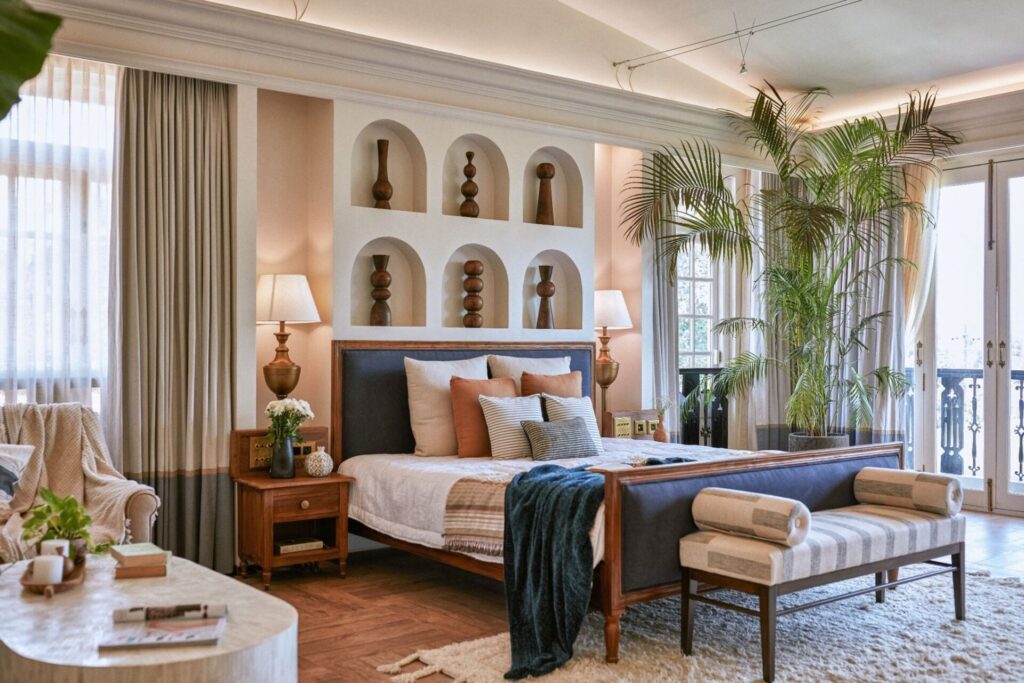
A significant portion of buyers today are not looking for a primary residence but in a second or third home, an escape, a long-term lifestyle asset. They are looking for a fully managed home, where maintenance, security, landscaping and hospitality are included seamlessly. They want the ability to arrive at a home that is ready, maintained, and functional without the hassle of managing it.
Effortless ownership is not just a phase; it is the way of life.
| Self-Managed Villa | Fully Managed Villa |
| Owner arranges upkeep remotely | Professional on-site team handles all upkeep |
| Inconsistent maintenance quality | Hospitality-grade standards maintained |
| Owner builds vendor relationships | Vendor network handled centrally |
| Arrival experience unpredictable | Home ready for every visit |
| ~80–120 hrs of owner time spent yearly | Minimal owner time required |
| No rental optimisation support | Rental programme available if desired |
Location, Re-explored
Location has always been real estate’s number one rule; what has changed today is its definition. The logic was always proximity to landmarks and urban cities; however, now the narrative has shifted to an escape to nature, calm, and an experience that cannot be replicated in a city. This has rapidly changed the logic to the emergence of India’s leisure micro-markets: Alibaug’s quiet northern coast, Coorg highlands, Nilgiri valleys and pockets of Goa that offer privacy without isolating you.
| Micro-Market | Approx. Price Appreciation (2019–2024) | Key Draw |
| Alibaug (North Belt) | +55–65%* | Proximity to Mumbai, coastal calm |
| North Goa Hinterland | +70–80%* | Seclusion, culture, year-round demand |
| Coorg / Madikeri | +40–50%* | Hill station, low density, nature |
| Coonoor / Nilgiris | +35–45%* | Climate, slow living, exclusivity |
| Karjat | +30–40%* | Weekend retreat, infrastructure growth |
Source: Anarock Residential Report 2024 · Local broker indices
These are not compromised locations; they are on purpose. As infrastructure improves highways, faster connectivity, larger airports cause the friction of distance continues to reduce. The proximity factor is now increasingly shifting to the distance from a city.
| LOCATION SHIFT | Micro-Market AppreciationSuggested visual: A map or timeline showing the emergence of India’s leisure villa micro-markets from 2018–2024. Highlight: Alibaug, North Goa hinterland, Coorg, Coonoor/Ooty, Karjat — with avg. appreciation rates where available. Illustrate the shift from urban proximity to purposeful seclusion. |
The Return That Does Not Reflect On a Spreadsheet
There is a side to owning a luxury home that financial analysis underestimates, it’s how a home makes you feel and shapes your life overtime. The most timeless luxury villas are personal sanctuaries, spaces designed for the individuals living there, to slow the occupant, to separate them from the pace and noise of the city, to offer the quiet moments that are becoming increasingly rare.
| Financial Return Metric | Emotional / Lifestyle Return Metric |
| Capital appreciation over time | Quality of life gained per visit |
| Rental yield potential | Mental reset value — reducing burnout |
| Resale premium vs. market | Sense of ownership & personal identity |
| Annual cost of ownership | Time saved vs. hotel or rental stays |
| Asset diversification value | Legacy value for family over generations |
Slow living as a concept has moved from being a lifestyle editorial term to a genuine buyer requirement. Homes are designed to support it with meditative outdoor spaces, open kitchen spaces, rooms that encourage reading rather than scrolling, attracting buyers who are choosing wellness and luxury while being in one space with architecture and specifications that hold up for over a decade.
Luxury here is not just constructed; it’s curated. It is the perfect harmony of design, build, and service. And the result is not a big home, but rather the right home.
And for Isprava, this is not merely an aspiration; it’s the way we operate. From the very beginning, the company has championed itself with its design-first philosophy. Homes conceived for specific landscapes, carved for specific requirements, holding on for generations to come.
| Luxury Used to Be Defined By… | Luxury Is Now Defined By… |
| Excess — more of everything | Intent — every decision has a reason |
| Impressing at first glance | Feeling right over years of living |
| Price per sq. ft. | Value per experience |
| What you can see | What you cannot see (build, material, quality) |
| Status symbol | Personal sanctuary |
A New Way of Living
The shift in luxury villas showcases something broader, a maturation of the HNI buyer. These are people who have witnessed real estate and know that the first-glance impression is not the same as enduring over time. The most luxurious villas are not those that impress on arrival, but the ones that continue to feel right, calm and considered long after the initial thrill of getting a new home has settled. These are the homes that earn their worth over time, with the picturesque sunrise on the balconies, a leisurely walk in the afternoon in your courtyard, or the silence of the night lounging by the pool. This is the kind of luxury that is visible over time and is the only kind of worth investing in.
Curated for the Discerning Homeowner