

The Nilgiris are at their most vibrant in May, revealing a side of summer that feels refreshingly unhurried.
There is a particular kind of traveller who no longer wants to simply visit a place. They want to inhabit it; slowly, deliberately, with enough time to let the landscape settle into them. The Nilgiris in May speaks directly to that instinct. Tucked into the tri-state convergence of Tamil Nadu, Karnataka, and Kerala, this stretch of the Western Ghats is home to Ooty, Coonoor, and Kotagiri. It has long been one of India’s most storied hill destinations. And yet, what it offers in May specifically is something that no other month quite replicates.
In 2026, the Nilgiris are experiencing one of their strongest surges in summer tourism in recent years, with visitors arriving not just for the predictable cool weather, but for a growing awareness that these hills offer something rarer: genuine, unhurriedness. Here are ten reasons why May, in particular, rewards the discerning traveller.
A Weather made for Slow Mornings
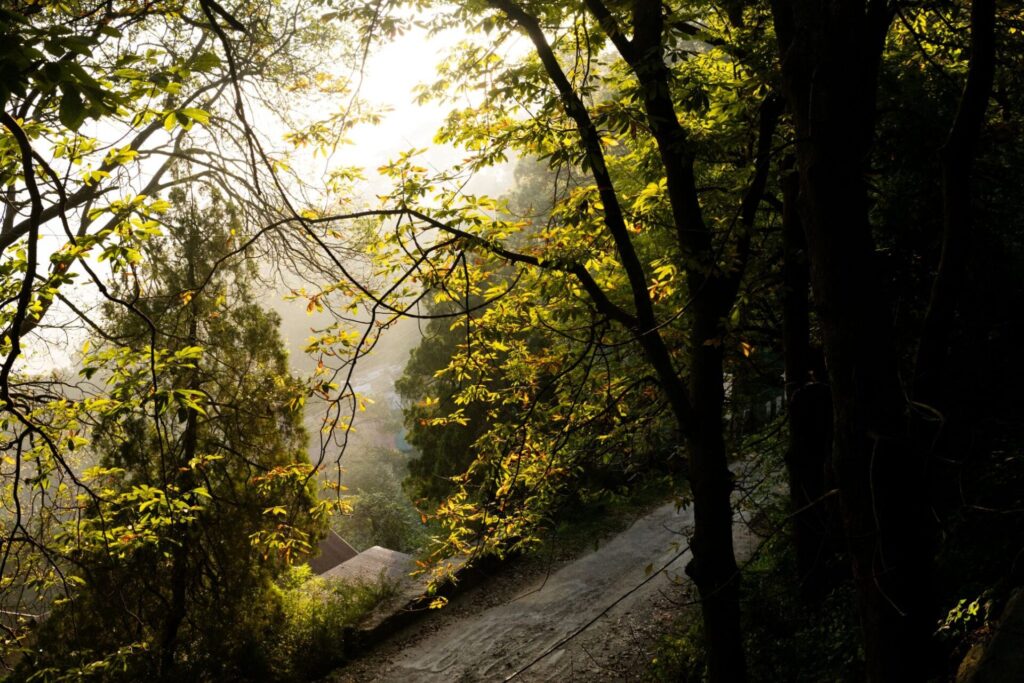
At an elevation of over 2,200 metres, the Nilgiris operates on its own meteorological logic. While the plains below cook under India’s most unforgiving summer heat, the hills maintain temperatures that hover between 10°C and 25°C through most of May. There’s a particular quality to the light here, soft in the mornings, golden by afternoon. That makes even the most ordinary moment feel considered.
This isn’t comfortable by default. It’s the kind of climate that actively encourages presence: morning walks without breaking a sweat, evenings with a blanket, meals eaten outdoors because the air genuinely earns it.
Ooty Summer Festival: A Celebration Rooted in the Nilgiris
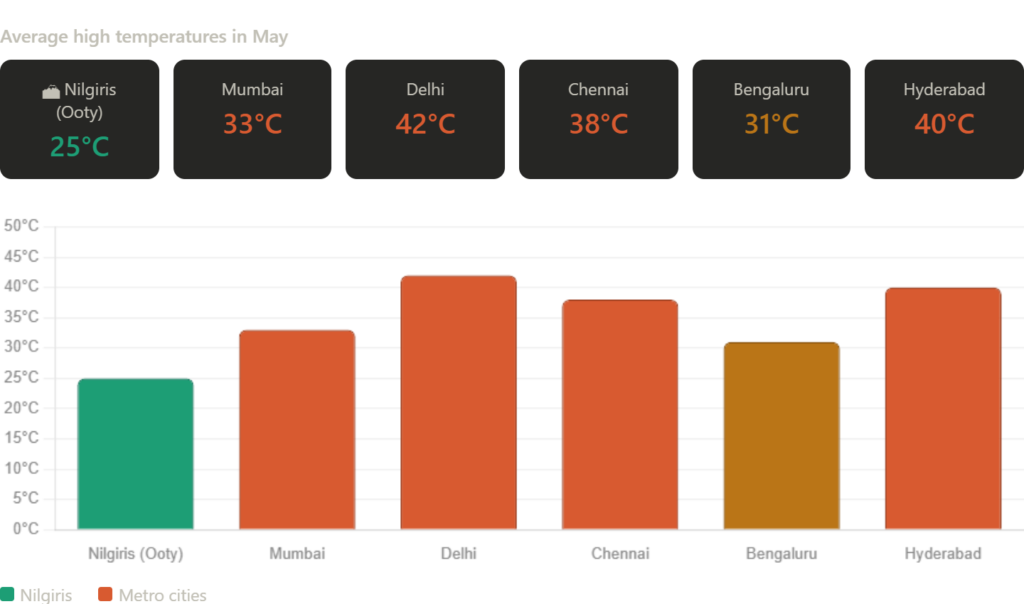
Each May, the Nilgiris administration organises a series of summer festivals across Ooty, Coonoor, and Kotagiri, featuring flower exhibitions, vegetable shows, spice fairs, rose displays, and fruit fairs. These aren’t manufactured tourist spectacles. They are rooted in the horticultural identity of the hills, a living showcase of what this landscape produces.
The Government Botanical Garden’s annual flower show, which this year features over 40,000 flower pots and new infrastructure including renovated pathways, is the centrepiece. But the real reward is in the smaller events: the Kotagiri Vegetable Show, the Coonoor Fruit Show, the Rose Show, each a quiet study in how deeply this land rewards cultivation.
Avalanche Lake Opens Its Trail
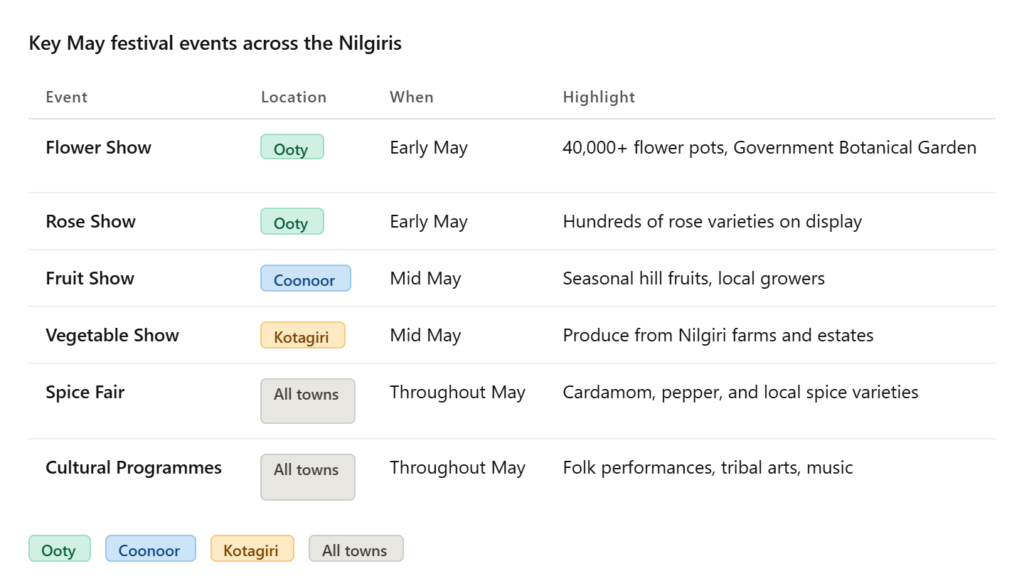
Some places earn their name. Avalanche Lake, formed by a massive 19th-century landslide, is located 28 kilometres from Ooty town, past Emerald Lake, and is surrounded by undisturbed forest. Access to the two-mile trail into the lake’s basin reopens as May begins, making it one of the more compelling seasonal experiences in South India.
The lake itself is ringed by panoramic mountain faces. Activities here include trout fishing, camping, and trekking toward Upper Bhavani. And you feel genuinely remote, which is increasingly rare in India’s more accessible hill stations. The views from the top of the hill at Avalanche are described as an experience of wonder and delight by those who have made the climb.
Most Scenic Way to Experience the Nilgiris
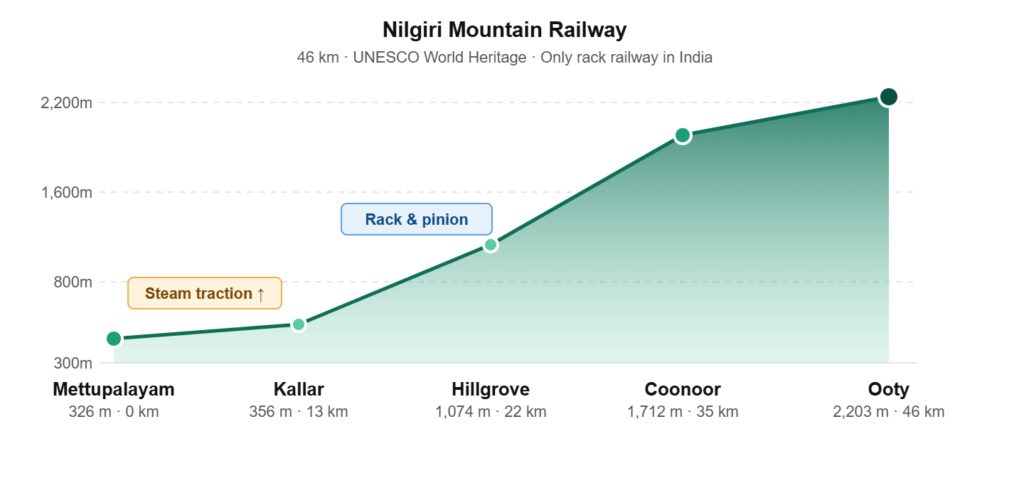
India has many heritage railways. Few earn the term the way the Nilgiri Mountain Railway does. The toy train is the only daily operational metre-gauge rack railway in India, running 46 kilometres from Mettupalayam to Ooty via Coonoor. The rack-and-pinion mechanism, a Victorian-era engineering solution to gradients of up to 8.3% still operates on steam for part of its journey.
What strikes most travellers isn’t the novelty. It’s the pace. The train moves slowly enough that the landscape has time to declare itself: tea estates giving way to shola forests, mist drifting across valleys, the town of Coonoor appearing and then receding. Travellers consistently recommend booking well in advance through the IRCTC website, particularly for the morning uphill journey from Mettupalayam, which offers the most dramatic views.
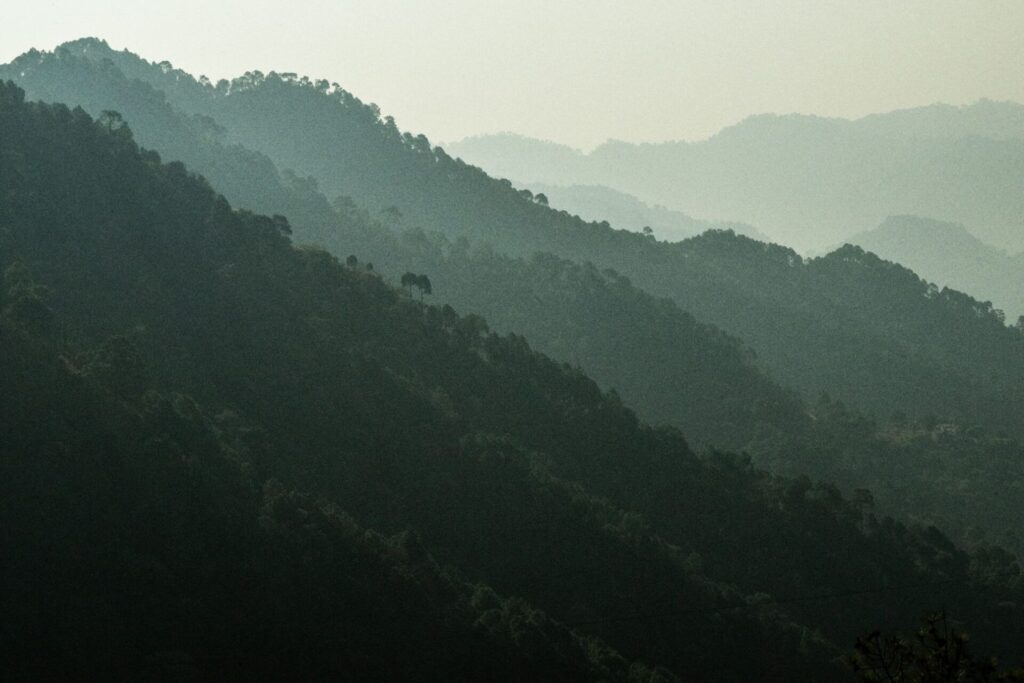
Dolphin’s Nose, best seen on a clear May morning. The viewpoint at Dolphin’s Nose in Coonoor sits at roughly 1,550 metres and juts out, shaped precisely as the name suggests over a dense valley of tea and forest. On a clear May morning, before the afternoon clouds move in, the panorama is complete: layered green ridgelines, and if conditions cooperate, Catherine Falls visible in the middle distance.
The Coonoor climate in May is particularly well-suited to this kind of morning excursion: cool enough to walk without discomfort, clear enough to make the distance legible.
Mudumalai: Wildlife Without the Crowds of Peak Season
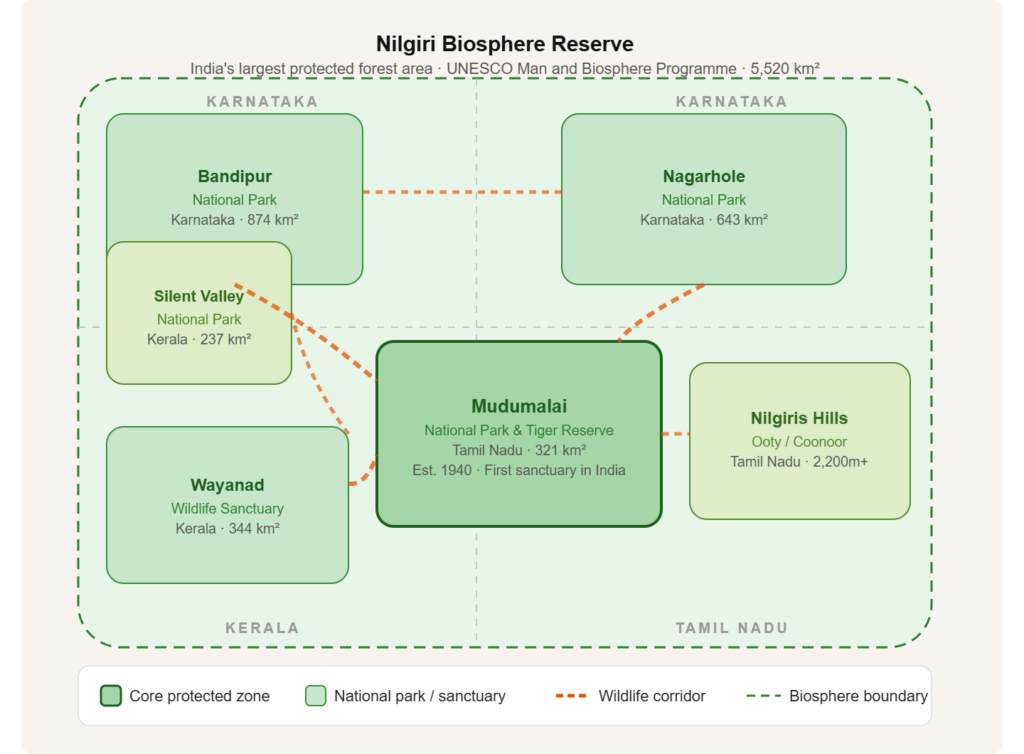
Mudumalai National Park lies on the north-western edge of the Nilgiris, about 31 kilometres from Ooty, and was established in 1940 as the first wildlife sanctuary in India. In May, the dry conditions reduce the density of undergrowth, making animal sightings more likely. Particularly elephant herds moving toward water sources, and the birdlife that peaks during the pre-monsoon period.
The park is part of the Nilgiri Biosphere Reserve, the largest protected forest area in India, and sits within the UNESCO Man and Biosphere Programme. Visiting it isn’t simply a wildlife excursion. It’s a reminder of the scale of what these hills are quietly protecting.
Ooty Lake Is Worth an Afternoon
The Ooty Lake is an artificial lake created in 1824 by John Sullivan, then Collector of Coimbatore, and covers 65 acres. It sits at the centre of town, framed by eucalyptus trees. A boat out onto the lake on a May afternoon and the town receding to the edges, the hills surrounding it in layers is a surprisingly meditative experience.
The lake doesn’t require much. It simply asks you to slow down and look.
Kodanadu Viewpoint Rewards the Drive
The road from Kotagiri to Kodanadu passes through pine forests and tea estates, with enough vantage points along the way to make the journey its own reward. The viewpoint at Kodanadu sits above a sweep of the Moyar river valley, with the plains of the Deccan visible in the far distance on clear days.
It remains, by most accounts, one of the least-crowded viewpoints in the Nilgiris which in May, given the broader surge in visitors, is itself a reason to seek it out.
Doddabetta Peak: The Nilgiris at Its Highest
At 2,623 metres, Doddabetta is the highest peak in the Nilgiris, sitting at the junction of the Western and Eastern Ghats. The trek to the top is accessible, not technical, and the views reward the effort with a panorama that takes in both ranges on a clear day.
There’s a telescope house at the summit. In May, before the monsoon haze arrives, the visibility is at its annual best.
The Nilgiris Is Becoming a Place to Stay, Not Just Visit
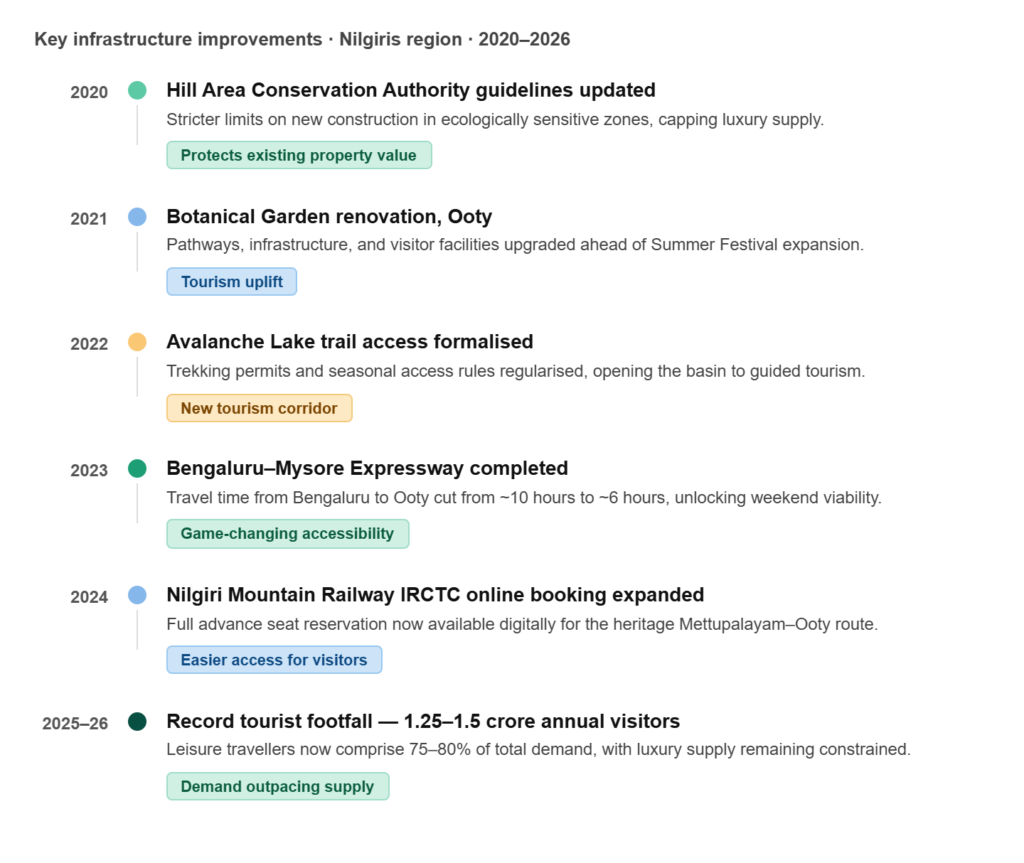
Perhaps the most meaningful shift in how the Nilgiris is being experienced is this: the region has emerged as one of the most preferred holiday home destinations in South India, driven by its conducive summer climate and improving infrastructure. The completion of the Bengaluru–Mysore Expressway in 2023 has reduced travel time to Ooty from 10 hours to around 6, fundamentally changing the calculus for those considering a second home here.
The Nilgiris currently records an annual tourist footfall of between 1.25 and 1.5 crore visitors, with leisure travellers comprising 75–80% of total demand. Yet the supply of quality luxury accommodation remains deliberately limited, development restrictions imposed by the Hill Area Conservation Authority mean that newer properties are unlikely to emerge at scale in the near term. What exists now, in terms of curated, well-located homes in this landscape, is what there will be for some time to come.
Raw nature has always had the capacity to restore something in people that city life quietly depletes. The Nilgiris have been doing this for two centuries, first for the British who retreated here from the Madras summer, then for Maharajas, then for generations of South Indian families who measured childhood by the smell of Ooty in May.
What’s changed is the quality of what it means to stay here. To have a home in these hills, not a hotel room, not a rented week, but a place that is yours, is to have something that compounds over time. The morning light on the tea estates. The particular quiet of fog moving through a valley at dusk. The way the cold arrives each evening is like a habit.
These are things you don’t fully appreciate on a visit. You begin to understand them only when you stay.
At Isprava, we build homes in India’s most considered landscapes, crafted to hold up not just to the first impression, but to every season that follows.