

A closer look at how centuries of cultural influence continue to shape Goa’s homes, lifestyle and long-term desirability.
There is something quietly exceptional about Goa that no other destination in India can replicate. It isn’t just the beaches or the balmy weather. It is the feeling, as you walk through the laterite-stone lanes of Fontainhas or sit beneath the vaulted ceiling of a 16th-century cathedral, that you are somewhere layered, somewhere earned. That quality has a name, and a history: the Portuguese legacy.
For 451 years; from 1510 to 1961, Portugal governed Goa, leaving behind not just buildings and surnames, but an entirely distinct way of life. In 2026, that inheritance is more relevant than ever. As India’s luxury property market matures and buyers begin seeking homes with cultural depth, not just square footage, Goa’s Goan heritage has become a genuine differentiator. The question is no longer whether the Portuguese influence matters.
Architecture as Identity — The Built Legacy of Portuguese Goa
Goa’s architectural landscape is unlike anything else in India. Where most of the subcontinent inherited Mughal domes or Rajput fortifications, Goa absorbed Baroque grandeur, Manueline ornamentation, and Gothic verticality, and adapted all three to a tropical climate, local laterite stone, and Goan sensibility.
The result is a built environment that is simultaneously European and deeply Indian. The Basilica of Bom Jesus, a UNESCO World Heritage Site since 1986, remains the most prominent example: its gilded interiors, Mannerist details, and warm stone facade are among the finest examples of Baroque sacred architecture in Asia. The Sé Cathedral, the largest church in Asia at the time of its completion in 1619, speaks to the ambition of Portuguese Goa, a colony that intended to stay.
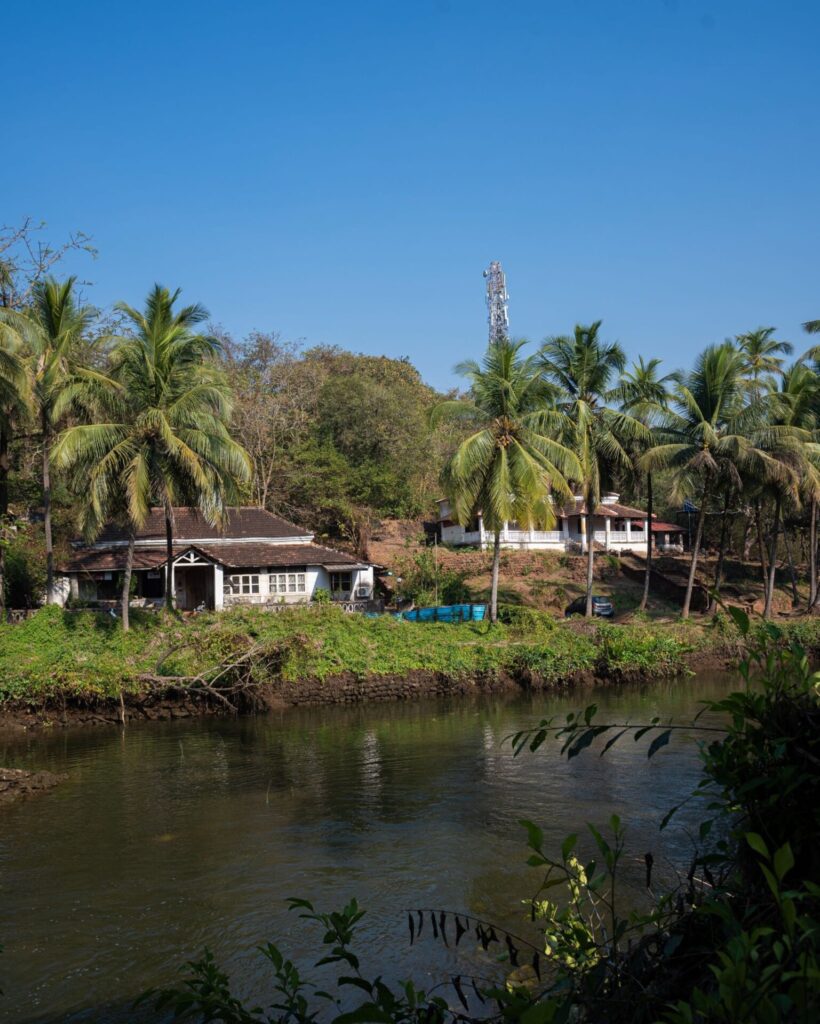
What is perhaps more remarkable is what happened beyond the churches. In Fontainhas, Goa’s Latin Quarter in Panaji, entire streets of colonial-era homes survive intact. Their pastel facades, oyster-shell windows, and overhanging wooden balconies are not museum pieces, they are lived-in homes, maintained by families whose roots trace back generations. Further afield, houses like Braganza House in Chandor and the Figueiredo Mansion in Loutolim operate as informal heritage museums, their interiors filled with Indo-Portuguese furniture, Venetian chandeliers, and hand-painted Chinese porcelain.
This architectural DNA is now influencing contemporary luxury residential design across Goa. New developments increasingly draw on the Indo-Portuguese vocabulary: deep verandahs, high ceilings, terracotta-tiled roofs, courtyard layouts. As both aesthetic homage and functional response to the Goan climate.
Goa’s UNESCO and Protected Heritage Footprint (2026)
| Category | Count / Detail |
| UNESCO World Heritage Sites in Goa | 1 (Churches and Convents of Old Goa, inscribed 1986) |
| Monuments protected under ASI (Goa) | 16 centrally protected monuments |
| State-protected heritage structures | 280+ listed under the Goa Ancient Monuments Act |
| Fontainhas heritage zone area | Approx. 8 hectares, ~180 protected structures |
| Indo-Portuguese mansions open to visitors | 10+ across South Goa (Chandor, Loutolim, Quepem) |
| Goa’s rank in domestic heritage tourism | Top 5 Indian states for cultural tourism (Ministry of Tourism, 2025) |
Culture, Language, and the Living Inheritance
Architecture is the most visible dimension of Goa’s Portuguese past, but the cultural inheritance runs deeper. It lives in the music, in the surnames, in the calendar of festivals, and in the texture of daily conversation.
Music is perhaps where this is most viscerally felt. The Mando, a song-and-dance form that emerged in the 18th and 19th centuries is a genuine Indo-Portuguese creation, blending Portuguese lyrical structures with Indian melodic traditions. Performed at weddings and social gatherings, the Mando has no clear parallel elsewhere in India. It was listed by the Goa government in its cultural heritage registers, and active efforts are underway to include it in India’s nomination to UNESCO’s Intangible Cultural Heritage list. The Fado, while originally Lisbon’s melancholy soundtrack, found its own Goan resonance, a form of longing that speaks to the state’s complex relationship with its colonial memory.
The Carnival, introduced by the Portuguese in the 18th century as a pre-Lenten celebration, remains Goa’s most visually spectacular festival. In 2026, the Goa Carnival drew an estimated 250,000 domestic and international visitors across its four-day run in February, making it one of the largest festival-tourism events on India’s west coast. The floats, street dances, and masked performers create a cultural spectacle that has no equivalent elsewhere in India.
Even language carries the weight of history. Konkani, Goa’s mother tongue and India’s 14th scheduled language is peppered with Portuguese loan words. Janela (window), sapato (shoe), mesa (table), and bandeja (tray) are everyday vocabulary. Several hundred Goan families, particularly in South Goa, still speak Portuguese as a household language. Goan surnames D’Souza, Pereira, Fernandes, D’Costa are now among the most common Catholic surnames in the country, carried by millions who may never have been to Portugal.
Portuguese Cultural Markers Still Active in Goa (2026)
| Cultural Element | Current Status |
| Mando music | Actively performed; heritage documentation underway for UNESCO nomination |
| Goa Carnival | ~250,000 visitors annually; February 2026 edition drew record domestic tourism |
| Portuguese loan words in Konkani | 500+ documented words in daily usage |
| Portuguese-speaking households in Goa | Estimated 7,000–10,000 (primarily South Goa) |
| Catholic population in Goa | ~26% of state population (~400,000 people) |
| Indo-Portuguese cuisine restaurants | 150+ restaurants specifically marketing Goan-Portuguese cuisine (Zomato/Swiggy data, 2025) |
Cuisine as Culture — The Table as a Heritage Document
No account of the Portuguese legacy in Goa is complete without food. What the Portuguese brought to Goa’s kitchen was transformative: vinegar, chillies, potatoes, tomatoes, and bread-making techniques, none of which existed in the Indian pantry before the 16th century. The result was a cuisine that is genuinely its own. Neither European nor conventionally Indian, but something richer than either.
Pork Vindaloo, Goa’s most internationally recognised dish traces its lineage to the Portuguese Carne de Vinha d’Alhos, meaning meat preserved in wine and garlic. The Goan adaptation substituted toddy vinegar for wine and introduced Kashmiri chillies, tamarind, and an arsenal of local spices. What emerged was something with sharper edges and deeper complexity than its Portuguese ancestor. Xacuti, Sorpotel, Cafreal, and Caldo Verde each carry a similar story of Portuguese foundations rebuilt in the language of Goan ingredients.
Bebinca, Goa’s ceremonial dessert, deserves particular mention. This multi-layered coconut and egg pudding, typically served during Christmas and Easter, takes hours to prepare. Each layer is individually baked before the next is added. Its labour-intensiveness is part of its cultural value. Bebinca is not fast food; it is an act of preservation, a recipe passed through generations, unchanged.
The pão, Goa’s daily bread, baked in wood-fired ovens by the poder (the traditional Goan baker) is equally significant. In 2025, Goa had approximately 700 active poder families still practising their craft, though urbanisation and ingredient costs are placing the tradition under pressure. Several heritage food organisations are now documenting and supporting poder communities as part of broader cultural conservation efforts.
Goa’s culinary heritage has also become an economic asset. Heritage food tourism guided culinary walks, ancestral kitchen experiences, and Portuguese-Goan tasting menus is among the fastest growing tourism sub-segments in the state.
Goa’s Heritage Food Economy (2025–2026)
| Indicator | Figure |
| Goa’s total tourism revenue (2024–25) | ₹17,200 crore (Goa Tourism Dept estimate) |
| Share attributable to culinary/cultural tourism | ~18–22% (approx. ₹3,000–3,800 crore) |
| Active poder (traditional bread-baker) families | ~700 (down from ~1,200 in 2010) |
| Bebinca producers registered under GI tag application | Goa’s GI tag for Bebinca granted in 2023 |
| Indo-Portuguese cuisine mentions on international travel platforms | Featured in Condé Nast Traveller, Vogue India, and Lonely Planet’s 2025 Goa editions |
| Growth in culinary tourism bookings (Goa, 2023–2025) | ~34% increase over two years (NITI Aayog Tourism Report, 2025) |
Heritage, Preservation, and the Future of a Living Legacy
In 2026, the conservation of Goa’s Portuguese legacy is no longer purely a sentimental exercise. It is a planning challenge, an economic priority, and an increasingly sophisticated real estate consideration.
The pressures are real. The Goa Coastal Zone Management Plan, revised in 2023, placed new restrictions on construction within heritage precincts and coastal buffer zones. Changes that have simultaneously constrained supply and elevated the premium on well-located heritage properties. Land within designated heritage zones, particularly in Old Goa, Fontainhas, and the village clusters of Aldona, Moira, and Loutolim, now commands a significant scarcity premium.
Private conservation has also grown more organised. The Goa Heritage Action Group, the INTACH Goa chapter, and several municipal bodies are actively cataloguing at-risk structures. Under Goa’s Cultural Heritage Conservation Policy (2022), incentives including property tax relief and restoration grants are available to owners of listed heritage structures who maintain them to specification. The policy has encouraged renewed family investment in ancestral properties that might otherwise have been sold or left to deteriorate.
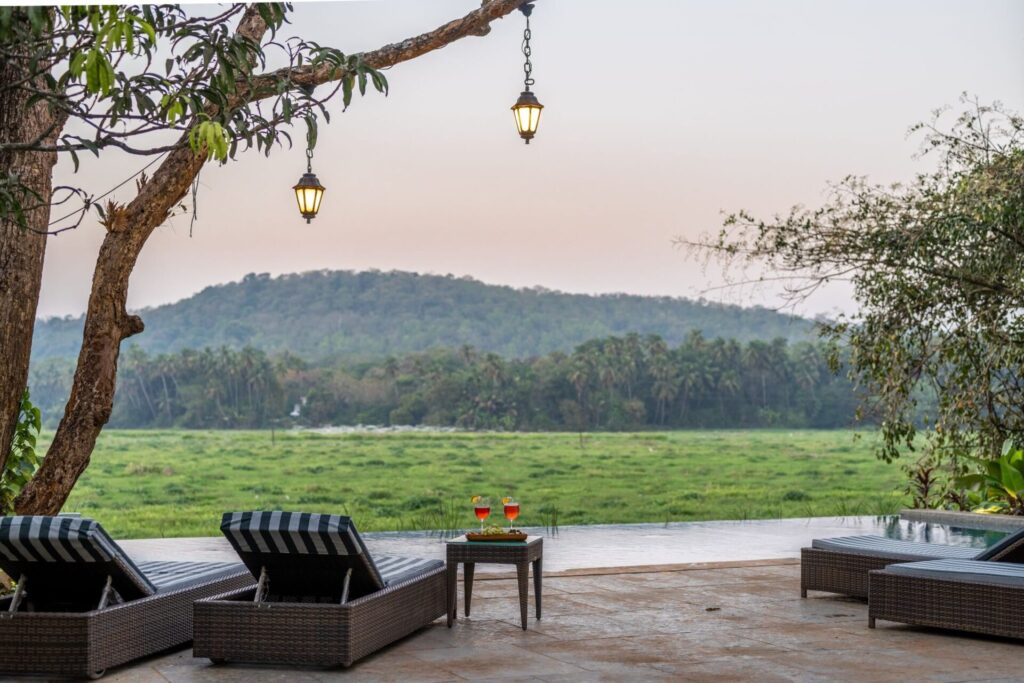
Luxury residential development has taken note. The design vocabulary of new premium homes in Goa increasingly draws on the Indo-Portuguese template. Not as nostalgic pastiche, but as a genuinely considered architectural language suited to the landscape, the climate, and a buyer community that values cultural context. High ceilings, wide verandahs, courtyard gardens, laterite stone walls, and terracotta-tiled roofs are now as much a premium marker as a swimming pool.
The broader implication is significant. In a market where most luxury residential products look similar across cities, Goa’s heritage offers something rare: a sense of place that cannot be replicated and cannot be manufactured. That distinctiveness, rooted in four centuries of Indo-Portuguese exchange, is among Goa’s most enduring and least fully appreciated assets.
What makes Goa’s Portuguese legacy remarkable is not that it survived. It is that it adapted. Over four and a half centuries, it absorbed, hybridised, and became something distinctly Goan. neither colonial relic nor museum exhibit, but a living, breathing dimension of how people here build, cook, celebrate, and live.
For those considering a home in Goa, this history is more than atmosphere. It is context that gives a property genuine character, a location a sense of permanence, and an investment a quality that trend cycles cannot erode. The susegad philosophy. that Goan instinct for unhurried, considered living, is perhaps the Portuguese legacy’s quietest and most enduring gift.
In a world accelerating in every direction, Goa remains a place that knows the value of slowing down. That, more than any architectural style or festival or dish, is the inheritance worth owning.